Native Tapioca Starch vs. Modified Cassbake: Commercial Food Processor\
Native tapioca starch vs. modified starches (Cassbake 101, waxy maize): Learn gelatinization profiles, shear stability, and clean-label substitution for food manufacturing.
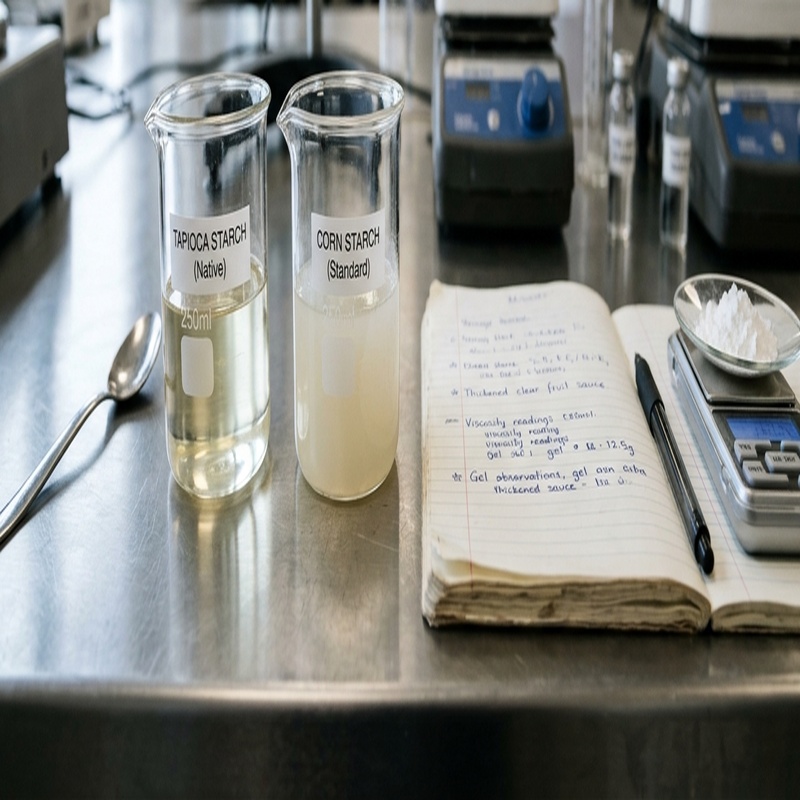
A technical commercial comparison for food processors, industrial bakeries, and sauce manufacturers evaluating single-origin native tapioca starch against chemically modified starches (Cassbake 101, Amyrose, modified waxy maize) for clean-label formulation, high clarity, and freeze-thaw stability.
Commercial Formula Ingredients
Scaled Batch- ARCO Single-Origin Native Tapioca Starch (55 lb sack)15.0 kg (30% Pilot Phase)
- Deionized Water (Process Slurry)35.0 kg
- Sunflower Lecithin / Vegetable Oil Emulsion1.2 kg
- Cane Sugar / Dextrose Carrier2.5 kg
Production & Culinary Method
Granule Swelling and Gelatinization Temperature Profiling
Disperse ARCO Native Tapioca Starch into cold carrier water at 20°C (68°F). Slurry achieves full dispersion without lump agglomeration within 90 seconds of moderate mechanical agitation. Native tapioca exhibits an initial pasting temperature between 62°C and 68°C—substantially lower than corn (75°C) or wheat starch (82°C)—yielding faster batch cycle times in industrial steam-jacketed kettles.
Clean-Label Ingredient Statement Alignment
Replacing chemically modified starches (e.g. hydroxypropyl distarch phosphate, E1442) with native tapioca simplifies package declaration to
Clarity, Sheen, and Sensory Neutrality Verification
Heat the pilot slurry to 88°C for 4 minutes. Native tapioca yields a crystal-clear, high-sheen paste with neutral sensory properties. Unlike cereal starches that impart a pasty or cereal flavor profile, tapioca leaves the primary fruit, meat, or cheese flavor completely unmasked.
Freeze-Thaw Retrogradation Resistance Testing
Subject thickened trial samples to 3 consecutive freeze-thaw cycles (-18°C for 24 hours followed by 20°C thawing). With an amylose content of only 17%, native tapioca resists the retrogradation and syneresis (liquid weeping) typical of unmodified corn or potato starches, maintaining velvety emulsification.