Clean-Label Sauce & Soup Thickening: Native Tapioca Starch vs. Modified Starches
Clean-label sauce and soup thickening guide: Replace modified starches with native tapioca flour. High clarity, neutral flavor, and exceptional freeze-thaw stability.
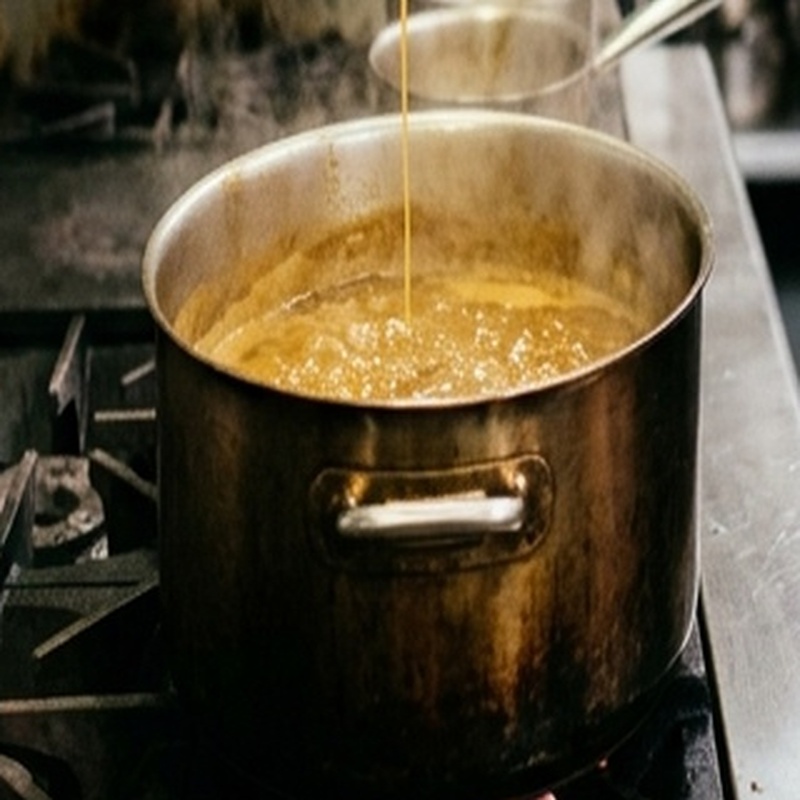
A commercial guide for food processors, sauce manufacturers, and institutional kitchens replacing chemical chemically-modified food starches with pure single-origin non-GMO tapioca flour for high clarity and freeze-thaw stability.
Commercial Formula Ingredients
Scaled Batch- ARCO Pure Food-Grade Tapioca Flour3.5 kg (3.5% w/w for light soup, 5.0% for heavy gravies)
- Cold Vegetable or Poultry Stock (Slurry Phase)10.0 L
- Hot Simmering Stock / Sauce Base86.5 L
- Clarified Butter / Plant-Based Fat Emulsion2.0 kg
- Sea Salt & Natural Aromatics1.2 kg
Production & Culinary Method
Cold Slurry Preparation (Preventing Agglomeration)
Never introduce dry native tapioca flour directly into hot or simmering liquids. In an auxiliary mixing vessel, disperse ARCO Tapioca Flour into the cold stock (ratio 1:3 starch to liquid) using an immersion shear mixer until a milky, free-flowing slurry is achieved.
Thermal Gelatinization in Jacketed Steam Kettle
Bring the bulk sauce liquid in your primary kettle to 85°C (185°F). While running the kettle agitator at moderate speed, stream the cold starch slurry continuously into the vortex. Native tapioca gelatinizes at 62°C–68°C, significantly lower than native corn starch (75°C–80°C), conserving kettle energy.
Shear and Acid Tolerance Management
Native tapioca produces a short, glossy, non-stringy texture with unmatched crystal clarity. Unlike corn starch which turns opaque, tapioca preserves vibrant soup colors. If formulating an acidic sauce (pH < 4.0, such as sweet & sour or tomato bisque), add acidic ingredients after the starch has gelatinized to prevent acid-induced viscosity breakdown.
Freeze-Thaw Stability and Hot-Holding Performance
Tapioca starch features a naturally low amylose ratio (~17%) compared to corn (~28%). This low amylose prevents retrogradation (syneresis or watery weeping) during refrigerated storage and repeated freeze-thaw cycles in frozen ready-meals.